Главное меню
Навигация
Настраиваем с нуля

Цикл статей Настройка Call Manager Express CUCME с нуля:
Цикл статей Настройка Call Manager CUCM с нуля:
Comunications Apps с нуля

UCCX
- Настройка Cisco Unified Contact Center Express (UCCX) с нуля. Часть 1
- Настройка Cisco Unified Contact Center Express (UCCX) с нуля. Часть 2
- Настройка Cisco Unified Contact Center Express (UCCX) с нуля. Часть 3
- Настройка UCCX 10.x, 11.x + Cisco Finesse desktop
- Установка скрипта для записи UCCX Prompts
CUC
- Настройка Cisco Unity Connection (CUC) с нуля. Часть 1
- Настройка Cisco Unity Connection (CUC) с нуля. Часть 2
CUP
- Настройка Cisco Unified Presence (CUP) с нуля. Теория
- Настройка Cisco Unified Presence (CUP) с нуля. Практика: Начальная установка
MediaSense
Настройка комплекта Cisco CUCM Business Edition 6000
- Настройка комплекта BE6000: Введение
- Настройка комплекта BE6000: Установка CUCM 11
- Настройка комплекта BE6000: Начальная установка CUC 11
- Настройка комплекта BE6000: Немного теории CUC 11
- Настройка комплекта BE6000: Настраиваем своего автосекретаря (IVR) в CUC 11
- Настройка комплекта BE6000: правильная Архивация CUCM 11.5
- Настройка комплекта BE6000: Восстановление CUCM 11.5 из архива
- Настройка комплекта BE6000: устанавливаем лицензии для телефонов CUCM 11.5
- Настройка комплекта BE6000: настройка конференции ad hoc CUCM 11.5
- Настройка комплекта BE6000: настройка конференции meet-me CUCM 11.5
- Настройка комплекта BE6000: настройка мониторинга комплекса CUCM 11.5
CUCM в крупном предприятии
- SRST. Теория (часть 1)
- SRST: Практика (Часть 2)
- Диалплан (dialplan) в крупной организации
- Cisco Device Mobility. Теория
- Cisco Device Mobility. Настройка
- Cisco Extension Mobility. Теория
- Cisco Extension Mobility. Настройка
- Call Control Discovery
- Настройка Multicast MOH Server на маршрутизаторах филиалов
- Cisco H.323 Gatekeeper. Теория
- Cisco H.323 Gatekeeper. Настройка и Практика
- Cisco H.323 Gatekeeper и Call Admission Control
- Практика подключения H.323 и SIP с использованием CUBE
- CUCM и LDAP Integration
DTMF и его настройка
Вы здесь
SIP и Call Manager. Часть 2 Настройка SIP gateway
Session Initiation Protocol (SIP) - один из наиболее важных и самых распространенных сигнальных протоколов. SIP поддерживает наибольшее количество вендоров. SIP продолжает распространяться и уже сейчас является идеальным протоколом для подключения различных систем VoIP.
В первой части SIP и Call Manager. Часть 1 Теория мы рассмотрели краткую теорию. В данной статье мы обсудим вопросы настройки SIP на IOS gateways.
Настройка SIP состоит из двух частей:
- Настройка SIP UA. Точнее сказать UAC (User Agent Client). Настройка UAC состоит из:
- Authentication parameters: username and password
- SIP servers (registrar and proxy) - Настройка VoIP Dial peers. В самом Dial peer есть настройки, специфичные для SIP:
- Session protocol
- Session target
Настройка User Agent
sip-ua

authentication username mir_user password psswr

registrar 10.10.1.15

sip-server 10.10.1.15
Команда registrar позволяет шлюзу регистрировать внутренние номера на внешнем сервере Registrar server. Благодаря этому система сможет принимать входящие звонки. Адрес можно вбить вручную или получить по DHCP (опция registrar-index).
Имя и пароль будут использоваться для доступа к Registrar server а также к Proxy server.
Dial-Peer Configuration
dial-peer voice 2001 voip

destination-pattern 2...

session protocol sipv2

session target sip-server

!

dial-peer voice 2002 voip

destination-pattern 9T

session target ipv4:192.168.10.100

session protocol sipv2
session protocol sipv2 Команда дает инструкцию в данном Dial-peer использовать протокол SIPv2.
Команда session target настраивает шлюз использовать определенный IP - адрес нужного SIP сервера, причем:
session target sip-server будет использовать настройки указанные в разделе sip-ua. Это позволяет не заморачиваться каждый раз на IP-адресе.
session target ipv4:192.168.10.100 - Здесь, как видно, IP адрес вбит "в лоб".
Дополнительные настройки
- Session transport protocol. Данные настройки позволяют задать session transport protocol: TCP, TCP-TLS, or UDP.
Доступно в global SIP, dial-peer, or UA configuration mode - Source IP address. Т.е. IP адрес с которого будет инициализироваться SIP-сессия.
Доступно только в global SIP. - Tuning SIP timers. Доступно только в UA configuration mode.
Пример конфигурации Gateway-to-Gateway
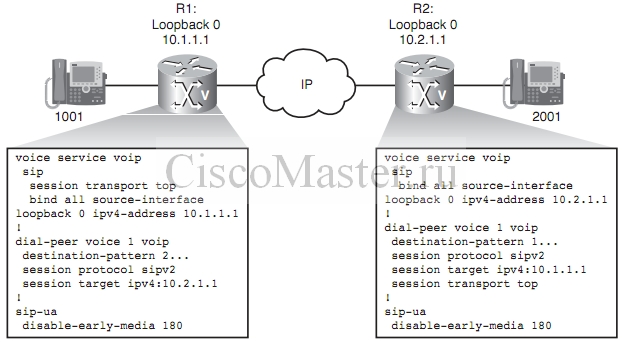
voice service voip |
voice service voip |
Здесь отметим команду disable-early-media.
Early Media - стандарт, позволяющий передавать media еще до инициализации стандартного RTP, что может улучшать качество, но не всему устройствами поддерживается.
Пример конфигурации UA
UA или User Agent - это по сути SIP-клиент.
Ниже приводится пример конфигурации подключения шлюза к SIP - провайдеру. Для исходящих звонков.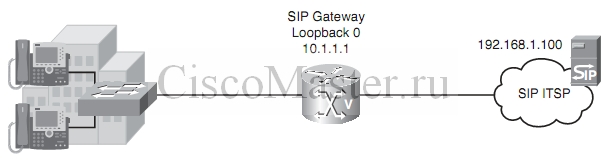
voice service voip

sip

bind all source-interface loopback0 ipv4-address 10.1.1.1

!

sip-ua

authentication username JDoe password secret

registrar 10.1.1.15 expires 3600

sip-server 10.1.1.15

timers connect 1000

timers register 300

!

dial-peer voice 10 voip

destination-pattern 9T

session target ipv4:192.168.1.100

session protocol sipv2

session transport tсp
Проверка
show sip-ua service
show sip-ua status
show sip-ua register status
show sip-ua timers
show sip-ua connections
show sip-ua calls
show sip-ua statistics
Дебаг
¦ debug ccsip: This command has various options, as follows:
¦ debug ccsip all: This command enables all ccsip-type debugging. This debug
command is very active; you should use it sparingly in a live network.
¦ debug ccsip calls: This command displays all SIP call details as they are updated
in the SIP call control block. You can use this debug command to monitor call
records for suspicious clearing causes.
¦ debug ccsip errors: This command traces all errors that are encountered by the
SIP subsystem.
¦ debug ccsip events: This command traces events, such as call setups, connec-
tions, and disconnections. An events version of a debug command is often the
best place to start because detailed debugs provide much useful information.
¦ debug ccsip info: This command enables tracing of general SIP security parame-
ter index (SPI) information, including verification that call redirection is disabled.
¦ debug ccsip media: This command enables tracing of SIP media streams.
¦ debug ccsip messages: This command shows the headers of SIP messages that
are exchanged between a client and a server.
¦ debug ccsip preauth: This command enables diagnostic reporting of authentica-
tion, authorization, and accounting (AAA) for SIP calls.
¦ debug ccsip states: This command displays the SIP states and state changes for
sessions within the SIP subsystem.
¦ debug ccsip transport: This command enables tracing of the SIP transport han-
dler and the TCP or UDP process.
¦ debug voip ccapi inout: This command shows every interaction with the call control
application programming interface (API) on both the telephone interface and on the
VoIP side. By monitoring the output, you can follow the progress of a call from the
inbound interface or VoIP peer to the outbound side of the call. This debug com-
mand is very active; you should use it sparingly in a live network.
¦ debug voip ccapi protoheaders: This command displays messages that are sent be-
tween the originating and terminating gateways. If no headers are being received by
the terminating gateway, verify that the header-passing command is enabled on the
originating gateway.
Работа с Eltex

UserGate с нуля

Security

- Cisco ISE с нуля: краткая теория (Часть 1)
- Cisco ISE с нуля: Установка ISE (Часть 2)
- Cisco ISE с нуля: Краткая теория о Authentication Policies и Authorization Policies (Часть 3)
- Cisco ISE с нуля: Wireless Authentication (Часть 4)
- Cisco ISE с нуля: Настройка Web Authentication, Guest WebAuth (Часть 5)
- Cisco ISE с нуля: настройка TACACS (часть 6)
Работа с ISE 3.2
Технологии VPN
- DMVPN и EIGRP
- DMVPN и резервный ISP
- Автопереключение между двумя провайдерами
- Подключение региональных офисов с серыми адресами по VPN
- Web VPN: подключение отовсюду
- Установка AnyConnect SSLVPN на IOS Router
- Работа с ASA Anyconnect SSL VPN HUB
- ASA и Wildcard certificate
- Настройка 3G/4G на Cisco ISR 1100 LTE 4g/3g Cellular
VoIP Voice Monitoring
VoIP Troubleshooting

- Обзор Cisco Unified Comunications System Troubleshooting
- Архивирование и восстановление Cisco Call Manager CUCM
- Поиск проблем с маршрутизацией CUCM с использованием traces
- Логирование и трекинг (trace) звонков в CUCM
- Работа с RTMT
- Полезное в RTMT
- Настройка учета звонков в CUCM
- CUCM Dialed Number Analyzer
- Полезные команды UCCX
CUCM и Факсы
Архивация и восстановление CUCM

Работа с медиа-ресурсами
SIP и Call Manager
- Часть 1 Теория
- Часть 2 Настройка SIP gateway
- Часть 3 Подключение CUCM к SIP ITSP
- Часть 6 Подключение к SIP-провайдеру
- Подключение CUCM к двум и более SIP операторам с авторизацией (sipnet + telphin). CUBE Multiple Registrars
- Подключение CUCM к SIP оператору с авторизацией по нескольким учеткам одновременно. (domru, sipnet, telphin, beeline) CUBE Multiple Registrars
- Cisco CUBE и Tenants
- Работа со "сложными" провайдерами SIP IP телефонии
Работа со стендом
- Настройка Cisco Unified Comunications с нуля. Практика01: Установка CUCM
- Настройка Cisco Unified Comunications с нуля. Практика02: Установка CUC
- Настройка Cisco Unified Comunications с нуля. Практика03: Установка CUP
- Настройка Cisco Unified Comunications с нуля. Практика04: Установка UCCX
- Настройка Cisco Unified Comunications с нуля. Практика05: Установка шлюза MGCP FXO
- Настройка Cisco Unified Comunications с нуля. Практика06: Переход в другой домен AD
- Настройка Cisco Unified Comunications с нуля. Практика07: Полное восстановление кластера CUCM 8.6 из архива
- Настройка Cisco Unified Comunications. Связка CUCM10.x_UCCX10.x_Mediasence10.x_01: Описание
- Настройка Cisco Unified Comunications. Связка CUCM10.x_UCCX10.x_Mediasence10.x_02: Установка CUCM
- Настройка Cisco Unified Comunications. Связка CUCM10.x_UCCX10.x_Mediasence10.x_03: Установка UCCX
- Настройка Cisco Unified Comunications. Связка CUCM10.x_UCCX10.x_Mediasence10.x_04: Установка Mediasense

Комментарии
Куда делась 3 часть про
Куда делась 3 часть про настройку SIP транков?
Пока дорабатывается
Пока дорабатывается, там обнаружилось пара некорректных моментов
А как скоро она появится в
А как скоро она появится в исправленом виде?
С нетерпением ждем 3ю часть
С нетерпением ждем 3ю часть
Остался не ясным момент:
Остался не ясным момент:
Настройка SIP UA. Точнее сказать UAC (User Agent Client). Настройка UAC состоит из:
- Authentication parameters: username and password
- SIP servers (registrar and proxy)
Может конечно я что-то не так делаю, но у меня циска выдает что параметра authentication нету:
Router(config-sip-ua)#?
SIP UA configuration commands:
default Set a command to its defaults
exit Exit from sip-ua configuration mode
max-forwards Change number of max-forwards for SIP Methods
no Negate a command or set its defaults
retry Change default retries for each SIP Method
sip-server Configure a SIP Server Interface
timers SIP Signaling Timers Configuration
transport Enable SIP UA transport for TCP/UDP
Router(config-sip-ua)#
У вас что-то обрезано. Может
У вас что-то обрезано. Может не активирована лицензия Voice?
А как быть если мне провайдер
А как быть если мне провайдер выдал отдельные регистрации под каждый номер?
пример моего конфига
no sip-ua
sip-ua
credentials number 3517786355 username 3517786355 password xxxxxxxxx realm 81.90.208.30
credentials number 3517786354 username 3517786354 password yyyyyyyyy realm 81.90.208.30
registrar ipv4:81.90.208.30 expires 240
sip-server ipv4:81.90.208.30
Провайдер говорит что подключение видит, а вот запросы регистрации не приходят. Лог вот что пишет:
Feb 4 10:16:17.411: //-1/xxxxxxxxxxxx/SIP/Msg/ccsipDisplayMsg:
Sent:
REGISTER sip:81.90.208.30:5060 SIP/2.0
Via: SIP/2.0/UDP 81.90.220.26:5060;branch=z9hG4bK6A1306
From: ;tag=5D6060-1DEC
To:
Date: Tue, 04 Feb 2014 10:16:17 GMT
Call-ID: ACE8129D-8CB411E3-8010A057-5C75DA15
User-Agent: Cisco-SIPGateway/IOS-15.3.3.M
Max-Forwards: 70
Timestamp: 1391508977
CSeq: 29 REGISTER
Contact:
Expires: 240
Supported: path
Content-Length: 0
Feb 4 10:16:17.411: //108/000000000000/SIP/Msg/ccsipDisplayMsg:
Received:
SIP/2.0 401 Unauthorized
Via: SIP/2.0/UDP 81.90.220.26:5060;branch=z9hG4bK6A1306;received=81.90.220.26
From: ;tag=5D6060-1DEC
To: ;tag=as423238e4
Call-ID: ACE8129D-8CB411E3-8010A057-5C75DA15
CSeq: 29 REGISTER
Server: Hypernet, LLC
Allow: INVITE, ACK, CANCEL, OPTIONS, BYE, REFER, SUBSCRIBE, NOTIFY, INFO, PUBLISH
Supported: replaces, timer
WWW-Authenticate: Digest algorithm=MD5, realm="hypernet.ru", nonce="71574435"
Content-Length: 0
Feb 4 10:16:17.415: //-1/xxxxxxxxxxxx/SIP/Msg/ccsipDisplayMsg:
Sent:
REGISTER sip:81.90.208.30:5060 SIP/2.0
Via: SIP/2.0/UDP 81.90.220.26:5060;branch=z9hG4bK6B20B6
From: ;tag=5D6064-2028
To:
Date: Tue, 04 Feb 2014 10:16:17 GMT
Call-ID: ACE8AF5E-8CB411E3-8011A057-5C75DA15
User-Agent: Cisco-SIPGateway/IOS-15.3.3.M
Max-Forwards: 70
Timestamp: 1391508977
CSeq: 29 REGISTER
Contact:
Expires: 240
Supported: path
Content-Length: 0
Feb 4 10:16:17.415: //109/000000000000/SIP/Msg/ccsipDisplayMsg:
Received:
SIP/2.0 401 Unauthorized
Via: SIP/2.0/UDP 81.90.220.26:5060;branch=z9hG4bK6B20B6;received=81.90.220.26
From: ;tag=5D6064-2028
To: ;tag=as357fb0e3
Call-ID: ACE8AF5E-8CB411E3-8011A057-5C75DA15
CSeq: 29 REGISTER
Server: Hypernet, LLC
Allow: INVITE, ACK, CANCEL, OPTIONS, BYE, REFER, SUBSCRIBE, NOTIFY, INFO, PUBLISH
Supported: replaces, timer
WWW-Authenticate: Digest algorithm=MD5, realm="hypernet.ru", nonce="20e9f677"
Content-Length: 0
Добавлю, что если настраивать
Добавлю, что если настраивать каждый номер отдельно через authentication то все работает корректно.
вместе два номера работать не хотят.
При успешной авторизации появляется в логах такое вот сообщение:
Feb 4 10:20:17.414: //-1/xxxxxxxxxxxx/SIP/Msg/ccsipDisplayMsg:
Sent:
REGISTER sip:81.90.208.30:5060 SIP/2.0
Via: SIP/2.0/UDP 81.90.220.26:5060;branch=z9hG4bK6F1154
From: ;tag=6109E0-2083
To:
Date: Tue, 04 Feb 2014 10:20:17 GMT
Call-ID: ACE8129D-8CB411E3-8010A057-5C75DA15
User-Agent: Cisco-SIPGateway/IOS-15.3.3.M
Max-Forwards: 70
Timestamp: 1391509217
CSeq: 32 REGISTER
Contact:
Expires: 240
Authorization: Digest username="3517786355",realm="hypernet.ru",uri="sip:81.90.208.30:5060",response="38b4330fec631a3a7a52312dff36f99e",nonce="3aac7e36",algorithm=MD5
Content-Length: 0
как этого добиться с credentials?
Вам нужно настраивать
Вам нужно настраивать несколько Registrars.
Configuring Multiple Registrars on SIP Trunks
Данную ссылку уже затер до
Данную ссылку уже затер до "дыр".. либо я плохо понимаю анлийский, либо там о моем случае ничего не написано.
пробовал такой вариант
sip-ua
credentials number 3517786355 username 3517786355 password xxxxxxxxxx realm 81.90.208.30
credentials number 3517786354 username 3517786354 password yyyyyyyyyy realm 81.90.208.30
registrar 1 ipv4:81.90.208.30 expire 240
registrar 2 ipv4:81.90.208.30 expire 240
sip-server ipv4:81.90.208.30
Результат такой:
sh sip-ua register st
--------------------- Registrar-Index 1 ---------------------
Line peer expires(sec) reg survival P-Associ-URI
================================ ========== ============ === ======== ============
3517786354 -1 28 no normal
3517786355 -1 28 no normal
--------------------- Registrar-Index 2 ---------------------
Line peer expires(sec) reg survival P-Associ-URI
================================ ========== ============ === ======== ============
3517786354 -1 28 no normal
3517786355 -1 28 no normal
в остальном все по прежнему
Проблема была в параметре
Проблема была в параметре Realm
Это должен быть не IP или DNS-имя сервера, как я ошибочно думал. правильное значение параметра можно посмотреть в логах ответа сервера при попытке авторизоваться.
sip-ua
credentials number 3517786355 username 3517786355 password xxxxxxxxxx realm hypernet.ru
credentials number 3517786354 username 3517786354 password yyyyyyyyyy realm hypernet.ru
registrar ipv4:81.90.208.30 expire 240
sip-server ipv4:81.90.208.30
нормально
нормально
а такой вопрос, возможно не
а такой вопрос, возможно не по теме конечно. Есть например Cisco 2851, какое количество sip сессий она сможет обработать?
И тут еще вопрос в том, что sip-транк будет с провайдером и с Lync сервером. Если мы хотим к провайдеру например 72 сессии, то сможет ли Cisco обработать 144 сессии?
Если на маршрутизаторе не
Если на маршрутизаторе не задействован транскодинг, 2851 поддержит порядка 500 полноценных сессий Flow-Through, см.
http://www.cisco.com/c/en/us/products/collateral/unified-communications/...
Спасибо. Только 2851
Спасибо. Только 2851 получается 225. Транскодинг пока не известно будет или нет.
Всем привет! Столкнулся с
Всем привет! Столкнулся с проблемой на ISR 2921 IOS 15.5(1)T1, регистрирую на нём 7841 телефоны с последней прошивкой. Проблема состоит в том, что при звонке с одного телефона на соседний появляются RTP Legs с роутера на оба телефона. манипуляции с redirect ip2ip или media flow-through/flow-around эффекта не дают, ноги по прежнему кидаются на шлюз и от него. В чём может быть проблема? Заранее спасибо за любые подсказки.
Вы уверены что это именно RTP
Вы уверены что это именно RTP legs?
что показывает show voip rtp connections ?
Также зайдите на html страницы самих телефонов, там тоже можно посмотреть куда идёт RTP
Уверен! В sh VoIP rtp conn
Уверен! В sh VoIP rtp conn присутствуют 2 ноги. В лампах то же самое. Кстати, эта новая серия 78xx телефонов, почему то не отображаются html страницы самих аппаратов.
как-то так:
как-то так:
VoIP RTP active connections :
No. CallId dstCallId LocalRTP RmtRTP LocalIP RemoteIP
1 685 686 16480 32228 10.7.50.1 10.7.50.106
2 686 685 16482 18450 10.7.50.1 10.7.50.102
Дополнительно, смотрел
Дополнительно, смотрел сегодня занятость dsp и sh call active voice compact, и таки да, при звонке на соседний в подсети телефон, появляются разумного происхождения call legs g711alaw, в sh call active voice compact, call leg помечается как media flow-through. DSP при этом не занят. Пробовал в подсекции sip секции CUBE давать no bind media source-address gig0/1, нет эффекта.
Попробуйте зазеркалить порт
Попробуйте зазеркалить порт одного из телефонов и разберите пакеты через Wireshark.
НА телефон доступ может быть запрещен, попробуйте команду:
telephony-service
service phone webAccess 0
Отчетливо виден медиа-поток
Отчетливо виден медиа-поток между телефоном и CUBE
Что имеет смысл искать в дампе?
спасибо, помогло вот что:
спасибо, помогло вот что:
telephony-service
service phone webAccess 0
voice register global
create profile
apply-config
По теме топика.
По теме топика.
Спасибо автору за труд!
Хотелось бы поинтересоваться, как организовать работу CUBE с подключенным sip-провайдером, если есть CUCM-кластер Publisher и Subscriber.
Т.е. как правильно написать dial-peer, что бы при недоступности ip-адреса Publisher, sip-пакеты отправлялись на ip-адрес Subscriber?
И соответственно, какие настройки должны быть прописаны в CUCM-кластере (Publisher и Subscriber)?
Спасибо!
Приветствую.
Приветствую.
Подскажите, если я правильно понял, cisco 2921 может поднять 6 x SIP trunk-ов, т.е. можно подключить 6 разных sip провайдеров. Но вот если провайдер предоставляет услуги без аутентификации, только по IP. Вместе и с sip аутентификацией на sip сервере и без аутентификации будет работать?
Да, это будет работать.
Да, это будет работать.
Например при аутентификации будет использоваться sip ua, и диалпир будет выглядеть примерно так:
Дилпир без требования аутентификации будет отличаться строкой:
session target sip-server
поменять на
session target itsp_ip_address
А если sip-server не один и
А если sip-server не один и все с аутентификацией, тогда в диал-пире в строке "session target sip-server", что нужно писать для каждого провайдера?
Очень хорошая статья, автор
Очень хорошая статья, автор молодец! А был ли у кого нибудь опыт стыковки терминалов aastra и cucm?) проблема в том что Астре все равно на конфиги от циски) она берет их с tftp сервера, и в этих конфигах указывается номер, аутентификационные данные и тд) как быть?)
Ошибочная ссылка:
Ошибочная ссылка:
"В первой части SIP и Call Manager. Часть 1 Теория мы рассмотрели краткую теорию."
http://ciscomaster.ru/content/sip-i-call-manager-chast-1-teoriya#overlay...
Вот верная:
http://ciscomaster.ru/content/sip-i-call-manager-chast-1-teoriya-0
Спасибо, исправил
Спасибо, исправил
Люди добрые подскажите как
Люди добрые подскажите как сделать. Провайдер предоставляет 12 сип номеров с регистрацией и аутентификацией при совершении звонка?логин отличается от номера телефона и на каждый номоер она своя.
см. Подключение CUCM к двум и
Эта инфа есть, но к сожалению в закрытом разделе
см. Подключение CUCM к двум и более SIP операторам с авторизацией (sipnet + telphin). CUBE Multiple Registrars.
а к кому обратиться за
а к кому обратиться за доступом к этому разделу?
У нас cisco4351 и не как не
У нас cisco4351 и не как не разберу как sip trunk настроить ? ( CUCM нету) телефоны прописал все работает внутри звонок ходит , теперь нужно что бы через 9 выходили на межгород по сиптранку , только опператор ip дает без логина и пароля
Добавить комментарий